Attention cafe maniacs! A cafe tour course with unique concepts from the start!
Translation in progress — showing the Korean original for now.
옹진군, 강화군, 파주시로 이어지는 코스로 섬 아닌 섬 풍경을 지닌 연륙도, 건축과 책이 어우러진 도심, 곤돌라 타고 임진강 건너 갤러리까지 돌아본다.
Details
- DMZ LIVE Experience Hall
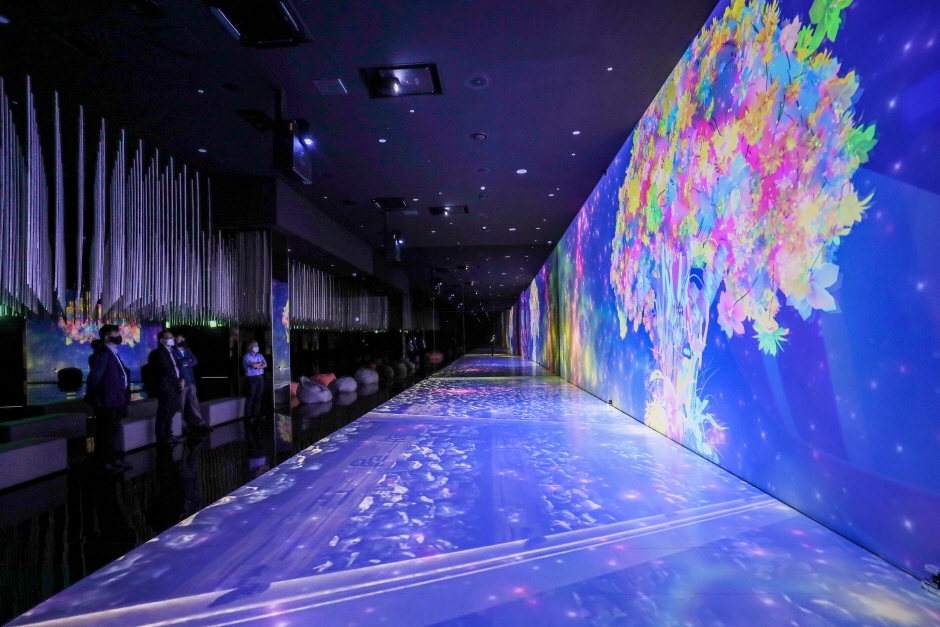
- DMZ Saengsaeng Nuri contains the meaning of being a place where you can experience and enjoy the DMZ more closely and vividly. It is a place that provides visitors with fun and meaningful experiences by realizing the diverse values and charms of the DMZ and border areas, such as history, symbolism, and ecological environment, through immersive media content.
- Paju Book City
- 이곳에는 출판사, 인쇄소, 제본소 등 출판 관련 업체들이 모여 있다. 출판사에 따라 도서관, 헌책방, 테마 도서관을 운영하는 곳이 많아 아이 뿐 아니라 어른에게도 좋다. 일회성 투어가 아니어서 주기적인 방문자가 많으며 출판사가 진행하는 문화 행사나 강연, 콘서트 등도 유익하여 훌륭한 문화의 장이 되고 있다.
- Laveniche Plaza
- 김포 한강신도시가 개발되며 조성된 한강중앙공원은 수변산책길의 금빛수로와 라베니체 상가까지 멋진 산책길로 이어진다. 총 길이 2.68km 산책길로 이어지는 금빛수로 라베니체는 남단과 북단까지 다양한 풍경이 펼쳐진다. 물의 도시 베니스를 모티브로 조성하였다는 라베니체는 왕복 1.7km 수변을 따라 다양한 상점들이 이어진다. 센트럴플라자 중앙광장을 중심으로 수변 좌우로 생활소품과 음식점, 맥줏집 등으로 가벼운 산책 후에 쇼핑과 함께 힐링타임을 즐기기에 최적인 곳이다.
- 수산공원
- 김포시 대명포구에 위치한 초대형 감성휴양카페이며, 초밥집, 키즈카페, 몬스터리움을 운영하고 있다. 수산공원의 오픈시간은 연중무휴 오전 열시부터 오후 아홉시까지이며 자연산 활어 회전초밥집 고래초밥은 오전 열한시 부터 오픈한다. 수산공원에는 넓은 주차장이 마련되어 있고 애견동반 출입과 유모차 반입이 불가하다.
- Joyang Textile
- 1933년 국내 자본으로 설립된 강화 최초의 인견 공장이었던 조양방직은 세월이 흘러 강화 직물이 쇠락하자 폐가로 전락했다. 흉물스럽게 쓰러져가던 건물은 거대한 카페로 재탄생하였다. 허물어져 가던 벽면은 근사한 미술관이며 영화관이 됐고, 기다란 작업대는 커피 테이블로 바뀌었으며, 기계도 사람도 떠난 공간은 중국과 유럽 등지에서 찾은 골동품으로 채워졌다. 깨진 유리창을 간직한 영국제 문짝, 체코의 옛 기차에 달렸던 둥근 거울, 겨울마다 몸을 뒤집느라 애쓴 붕어빵 기계가 원래부터 그 자리에 있었던 듯 자연스럽게 배치하여 990㎡(약 300평)가 넘는 공장터와 건물 골조를 그대로 살려 시간의 이야기를 카페 곳곳에 남겨두고 있다.현재 각종 음료와 케이크를 판매하고 있다.
- Jeondeungsa Temple, Ganghwa
- It is the oldest temple in Korea and the largest temple in Ganghwa. Harmonizing with the mountain, it offers a different feeling each season; in particular, it is good for a light hike while looking at the yellow ginkgo trees and autumn leaves. Underground, there are the modern-style Dharma hall Museoljeon and Seoun Gallery, and the gallery permanently operates Buddhist art exhibitions. Recently, it has also been selected as a Korean Unique Venue and wellness tourist destination, drawing attention, so it is recommended to visit while feeling autumn.
Located within the Jeongjoksan Samrangseong fortress (historical site), said to have been built by the three princes of King Dangun, Jeondangsa Temple has an uncertain founding date, but it was known as Jinjongsa Temple, a temple favored by the Goryeo royal family. The current name, Jeondangsa, is said to have originated in the 8th year of King Chungryeol of the Goryeo Dynasty (1282), when the queen, Princess Jeonghwagong, offered a jade candlestick to the Buddha. The Great Hall of Enlightenment (Daewoongpojeon), a national treasure, is a hip-roof structure with three bays in the front and two bays on the sides. Built in the 13th year of King Gwanghaegun (1621), it is one of the finest examples of mid-Joseon architecture. In particular, the intricate and exquisite beauty of the decorative panels above the altar inside the hall represents the pinnacle of architectural craftsmanship. During the Byeongin Yangyo War in the 3rd year of Emperor Gojong, soldiers who were determined to defend the nation against the French forces inscribed their names on the pillars and walls of the Great Hall of Enlightenment, hoping for the Buddha's blessing, and traces of these inscriptions still remain in various places.
The complex includes ten buildings, including the invaluable Yaksa-jeon hall, a bronze bell cast during the Northern Song Dynasty of China in the 11th century, the designated cultural heritage site "Sunmuchenghyangheonseungjeonbi" stele, and the local cultural heritage sites "Dajo-ru" pavilion, as well as the "Jangsagakji" and "Seonwonbokakji" buildings that once housed the "Silrok" (historical records) and "Wangse-sebo" (royal genealogies). There are also numerous ancient trees, including the legendary "Nanyeo-sang" statue, the "unblooming Ginkgo tree," and the "weeping tree." The Daeung-jeon hall, a designated treasure, is relatively small in size, but its elegant structure and intricate carvings make it one of the finest examples of mid-Joseon architecture. In particular, the elaborate and beautiful decorations of the "gat" (ornamental canopy) inside the hall represent the pinnacle of architectural craftsmanship. Each beam is adorned with dragon motifs, with the dragon heads protruding from the corners, while the ceiling is richly decorated with lotus flowers, peonies, and arabesques. The central ceiling panel is filled with "bosanghwa" (lotus flower) patterns.
* The Daeungjeon and Daeungbojeon Halls of Jeondeungsa Temple are small in scale but are decorated with neat structure and elaborate carved ornaments, making them among the finest buildings of the late Joseon period. In particular, the splendid and exquisite beauty of the datjip (canopy) decorated above the Buddhist altar inside achieves the pinnacle of architectural craft; each beam is decorated with dragon motifs, with dragon heads protruding from the four corners, and around the ceiling lotus, peony, and dangcho (scroll) patterns are splendidly embossed, while the central well-shaped ceiling is filled with bosanghwa (treasure flower) patterns. Even more rare is that fish are embossed on the ceiling, creating the illusion of being in a dragon palace; on the left ceiling of the canopy, a small yongga (dragon frame) with dragon-head ornaments on both sides and a dragon motif on its body had nine bells hung on its belly with strings extended to the Buddhist altar, so that pulling and shaking it made the nine bells ring simultaneously, once creating the spectacle of nine dragons roaring.
The Joryeong Pavilion is a wooden structure located directly in front of the entrance to the Daeungjeon Hall at Jeongeunsa Temple. It serves as the gate leading to the Daeungjeon Hall and features a two-story structure with a sign reading "Jeongeunsa" hanging beneath the eaves of the upper level. While appearing as a two-story building from the front, it appears as a single-story traditional Korean house when viewed from the Daeungjeon Hall. Built in 1839 by Seungtan, it was originally a two-story pavilion and served as the main gate of Jeongeunsa Temple. It has a structure of five bays wide and two bays deep, and inside each bay are plaques representing Jangsa-gak, Seonwonbo-gak, and Chwihyang-dang. Originally a two-story pavilion, it has deteriorated over time and now stands as a single-story building. It has a hip-and-gable roof and is painted with traditional Korean colors.
The Myeongbujeon Hall, also known as the Hall of the Ten Kings, is located to the southwest of the Yaksa Hall. Its construction date is unknown, but it was renovated in the 43rd year of King Yeongjo's reign (1767), the 5th year of King Heonjong's reign (1839), and the 21st year of King Gojong's reign (1844). The hall has three bays in the front and two bays on the sides, and houses Dizang Bodhisattva, along with the Ten Kings, Heavenly Kings, judges, generals, and attendants, totaling 29 statues.
The wooden statue of the Three Buddhas at Jeongeupsa Temple, created in the 15th year of King Gwanghaegun's reign (1623), is a remarkable wooden sculpture characterized by its graceful form, elegant proportions, and exquisite craftsmanship. The Three Buddhas, also known as the Buddhas of the Three Ages, represent the three aspects of Buddhahood: the Dharmakaya (the body of truth), the Sambhogakaya (the body of bliss), and the Nirmanakaya (the body of manifestation). They often depict Shakyamuni Buddha (the Buddha of the present age), Amita Buddha (the Buddha of the future), and sometimes Yakushi Buddha. This particular statue is housed in the Daeungbojeon hall at Jeongeupsa Temple. The main Buddha, Shakyamuni Buddha, stands 125 cm tall with a knee width of 88 cm. He has a gentle face with unusually large ears, broad shoulders and chest, and is in the "touching the earth" mudra (Antarabhumi mudra) while seated in a lotus position. He is draped in a robe that covers his left shoulder, and there are three petal-shaped designs on the chest area, above the folds of the under-robe.
* Jeondeungsa Yaksajeon
This building is located to the west of Daeungbojeon and is of almost the same style as Daeungbojeon. Its exterior appearance and interior decoration are also similar to those of Daeungbojeon. The Buddha statue inside the hall is likewise a seated Bhaisajyaguru (Medicine Buddha), somewhat stiff but compact and harmoniously composed. Judging from the style of the statue, it can be regarded as a stone Buddha belonging to the late Goryeo period. The architectural style of this hall is the mid-Joseon dapo style, a single-story dallyang building with 3 bays in front and 2 bays on the side. On a platform built of long stone blocks, rough stone foundation stones are placed, and the round columns have a slight entasis. The bracket sets (gongpo) are one outer and two inner projections; the ends of the salmi and cheomja on the first and second providing brackets are all in the angseo form, while the inner part above the columns is shaped like a gwanhyeong with carved decoration, but the bracket sets between the columns take the gyodu form. A characteristic of this hall is that, although it is dapo-style architecture, no pyeongbang is placed above the changbang. The interior ceiling has a coffered (well) ceiling in the central part and a slanted ceiling around it, on which colorful lotus-and-scroll (yeonhwa dangcho) patterns are painted in succession.
Jeongamsa's Incense Hall (향로전) is a building located to the right of the Daeung Hall, and it is where the monk Nojeon resides. It is an 8-gabled roof structure with 3 bays in the front and 2 bays on the sides. It was originally used as a storage room for offerings used in religious ceremonies, and it is said that during the Byeongin Yangyo (a series of naval conflicts), it served as the quarters for the central army. Jeongamsa is located within the Samrangseong fortress, which is said to have been built by the three sons of Dangun, the founder of Korea. According to tradition, it was built in the 11th year of King Sojirim of Goguryeo (381 AD) by the revered monk Adohwa. At the time of its founding, it was called Jinjongsa Temple.
* The Beomjong (temple bell) of Jeondeungsa Temple, designated as a Treasure, immediately reveals that its form is completely different from typical Korean bells. It is entirely a Chinese bell, with a total height of 163 cm and a base diameter of 1 m; the bell tower has twin dragons crouching, there is no yongtong (sound tube), and the bell body is divided into upper, middle, and lower sections with bands encircling it. This bell was cast as an iron bell in the fourth year of Shaosheng of Emperor Zhezong of Northern Song, China (1097, the 2nd year of King Sukjong of Goryeo) at Sungmyeongsa Temple on Baekamsan in Sumu County, Huizhou. It was plundered by the Japanese imperialists during World War II and placed at the Bupyeong Arsenal, and after liberation it was returned to Jeondeungsa Temple by a devout Buddhist and remains there today. The bell's form has twin dragons at the top, with 16 lotus petals around the dragon heads; on the bell body, 8 petals are arranged at the upper part, and below that several side bands divide the upper and lower parts, then bell lines create 8 square sections each on the upper and lower parts. In the elongated spaces between these square sections, inscriptions were embossed. The bell mouth is octagonal, seemingly forming the wave pattern seen in Chinese bells, and along it a rim band of small patterns encircles the mouth. The overall form is similar to the bronze bell of Yeonboksa Temple in Gaeseong, but it is the only Chinese iron bell in Korea designated as a Treasure and is valuable material for the study of Chinese-made iron bells. In particular, among the inscriptions, the names of the donors, laborers, and craftsmen at the time of casting are embossed, and near the lower rim of the bell mouth there are 27 characters reading "Daesong Huizhou".
* Jeongjoksan Mountain, Gakwol Site: This is the site of the Gakwol pavilion, built by King Gojong of the Goryeo Dynasty in 1259, based on the advice of Baek Seung-heon, who was a geomancer (expert in Feng Shui). At that time, when King Gojong inquired about a suitable location for the capital, Baek Seung-heon suggested building a Gakwol pavilion in Samrangseong and Shinni-dong. In 1264, during the reign of King Wonjong, when the Mongols demanded a visit from the king, Baek Seung-heon advised that building a Gakwol pavilion and performing a ritual at the Cheongseong Observatory on Manisan Mountain would resolve the issue of the royal visit and that neighboring countries would come to pay tribute. The building was destroyed by the Mongol army. It is said that even when the king did not reside there, the Gakwol pavilion was regularly furnished with a royal bed and clothing.
* Jeongjoksan Sago
Before the Imjin War, the archives that stored the Veritable Records included the inner archive Chun'chugwan and three outer archives at Chungju, Seongju, and Jeonju. During the Imjin War, only the Jeonju archive escaped destruction and all the others were lost. Afterwards, the Jeonju archive copy, which had survived the ravages of the Imjin War, was moved to Ganghwa, close to Hanyang, and in the 39th year of King Seonjo (1606) April the copying work was completed; the original Jeonju archive copy was enshrined at the Manisan archive, and the remaining four copies were enshrined at the Chun'chugwan, Taebaeksan, Myohyangshan, and Odaesan archives. The Manisan archive suffered damage during the Byeongja War and, due to a fire in the Sago in the 4th year of King Hyojong (1653) November, the Jeongjoksan Sago was built within Samnangseong and the records were moved and enshrined there. However, in 1910, when the country was forcibly annexed by imperial Japan, the Jeongjoksan Sago copy was moved, together with the Veritable Records of the Taebaeksan Sago and the books of the Gyujanggak, to the Academic Affairs Division of the Government-General of Chōsen, then in 1930 moved to Keijō Imperial University, and after liberation it has been kept at the Gyujanggak of Seoul National University. The Jeongjoksan Sago was damaged around 1930, leaving only the foundation stones on an empty site, and was restored and maintained in 1999 as part of the Ganghwa cultural project.
The Seolbeopdang hall and the Samrangseong fortress within Jeondeosaji Temple are known to have served as military bases. During the Byeongin Yangyo (1866), this area was used as a kitchen for 800 soldiers from Ganggyeoposu. Inside, there is a painting of Yeongsanhoesang, centered around a stone Buddha, depicting the twelve bodhisattvas, the Four Heavenly Kings, and the ten great disciples. The painting measures 240cm in width and 150cm in height. - 뻘다방
- 뻘다방은 인천광역시 옹진군 영흥면 바닷가에 있는 노을 맛집 카페다. 쿠바를 모티브 삼아 꾸며 이국적인 분위기가 물씬 풍기는 곳으로 선재도 제1의 명소로 꼽힌다. 다양한 커피와 음료, 베이커리가 준비돼 있으며 대표 메뉴 중 하나인 모히또는 뻘다방에서 생산하는 애플민트에 쿠바산 럼을 더해 직접 만든다. 갯벌과 바다가 눈앞에 있어 가족 나들이에도 좋고 포토존이 많아 연인들의 드라이브 코스로도 인기가 많다. 바다 앞 야외 테이블이 있으며 실내에서도 바다 뷰를 즐길 수 있는 좌석들이 있다. 종종 버스킹 공연이 열리기도 하고 사진 찍는 재미와 함께 SNS를 장식하기엔 최적의 장소이다.
※ Pets allowed
Visitor reviews 0
Videos of this place
Paju-si travel resources
All guides →- e-book