 (new window)
 (new window)
 (new window)
 (new window)
 (new window)
 (new window)
Stone Lantern at Jingusa Temple Site, Imsil
Korean name임실 진구사지 석등
Machine-translated from Korean. Show original
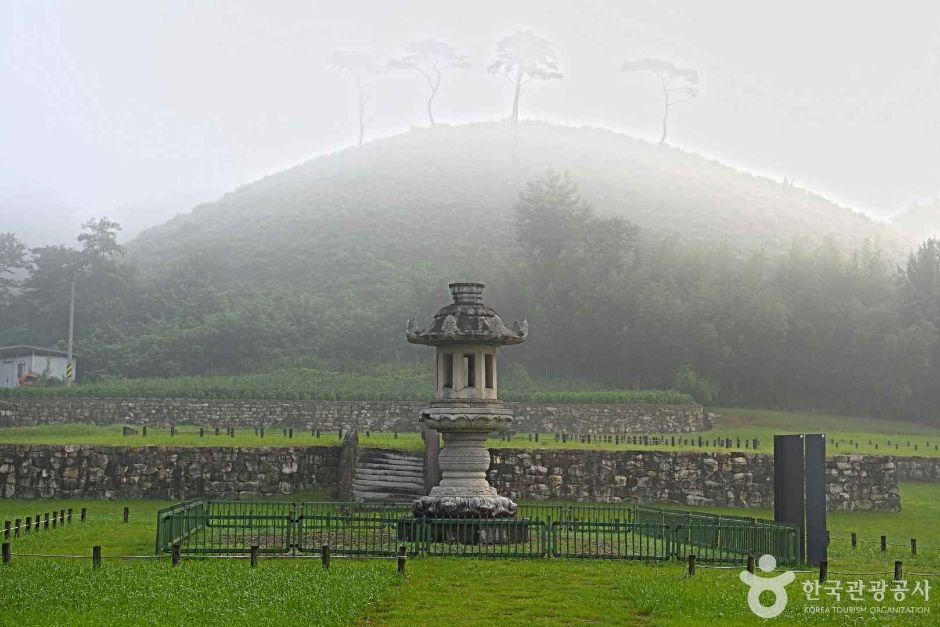
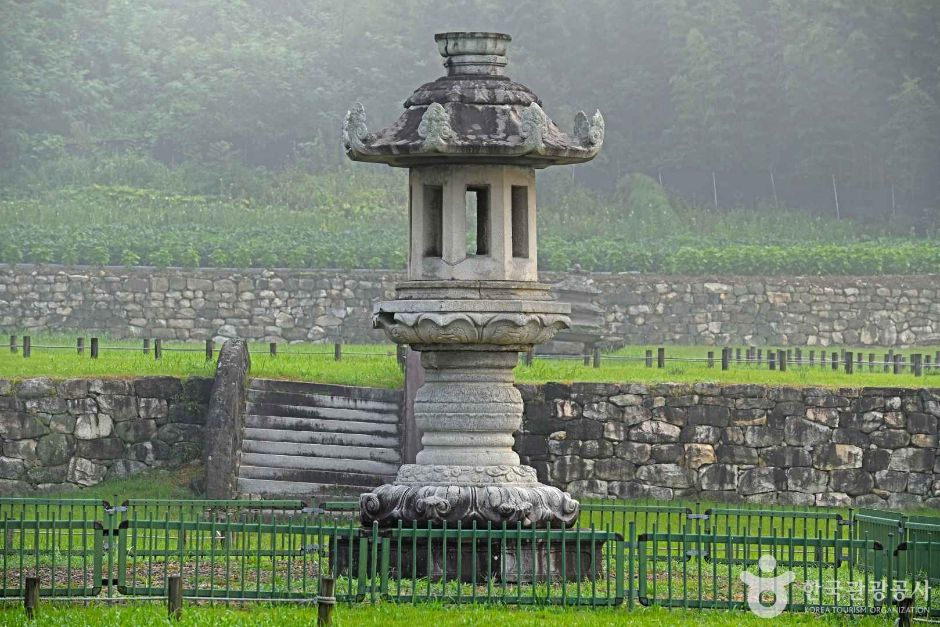
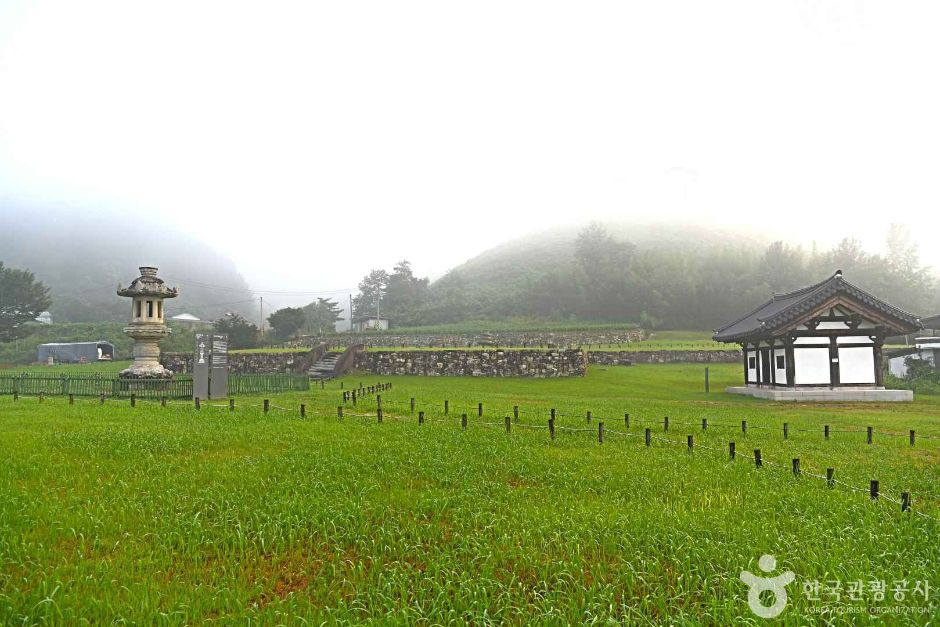
The stone lantern at Jingusa Temple site in Imsil was made in the 8th to 9th centuries during the Unified Silla period and is 5.18m high. During the excavation conducted from 1992 to 2001, when the ‘Jingusa Temple’ inscription (writing engraved on an iron Buddha, stone, or bowl) was discovered, the previous name, Yongam-ri Temple Stone Lantern, was changed to Jingusa Temple Stone Lantern.
Jingusa Temple was founded by Jeokmyeol and Uiyung of Goguryeo around the 7th century and was a Nirvana sect temple during the Unified Silla period. During the Goryeo Dynasty, it changed from a Jogye sect temple to a Cheontae sect temple. In 1407 (the 7th year of King Taejong's reign) in the early Joseon Dynasty, it was designated as one of 88 Jaboksa (temples praying for national prosperity).
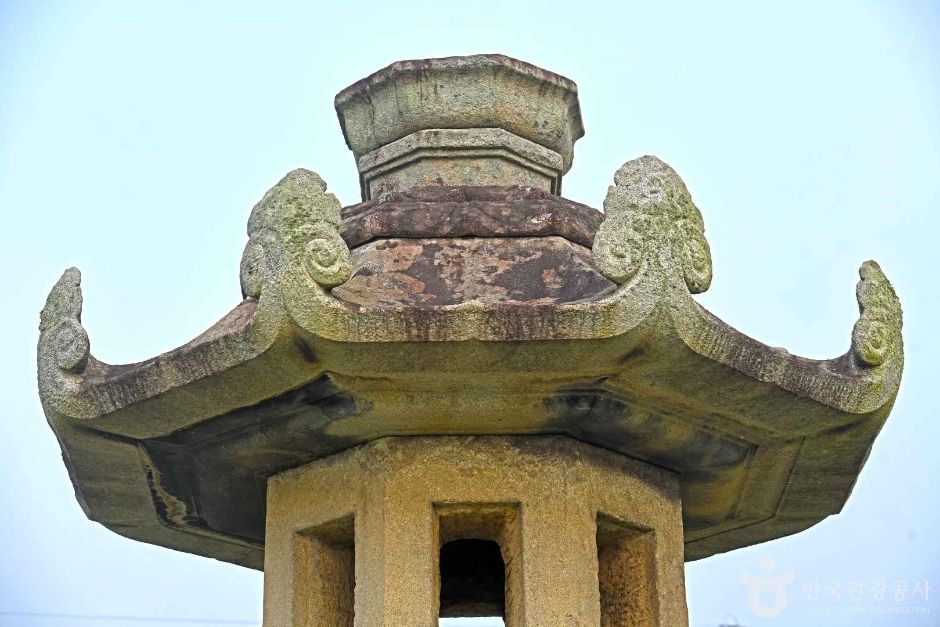
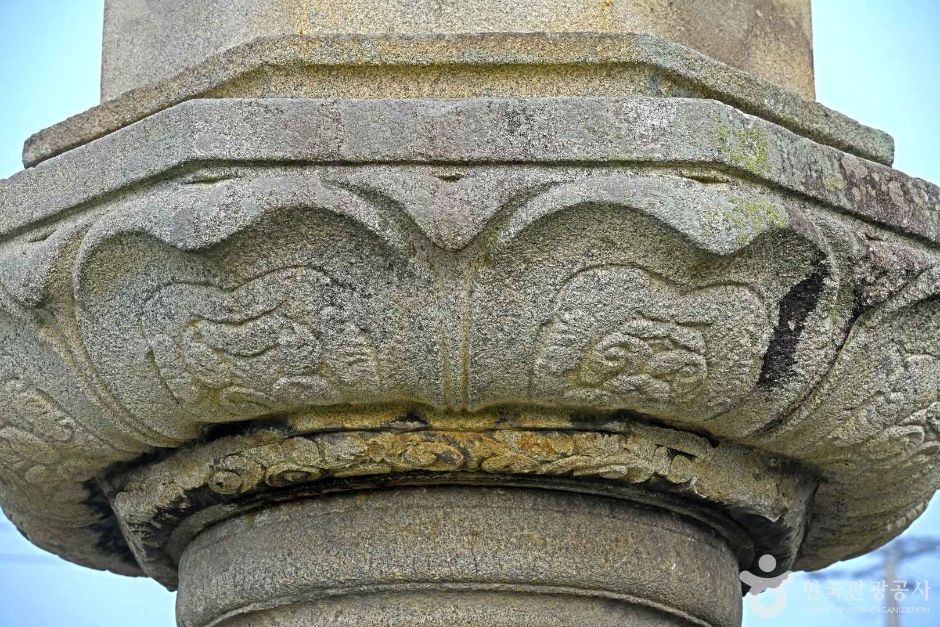
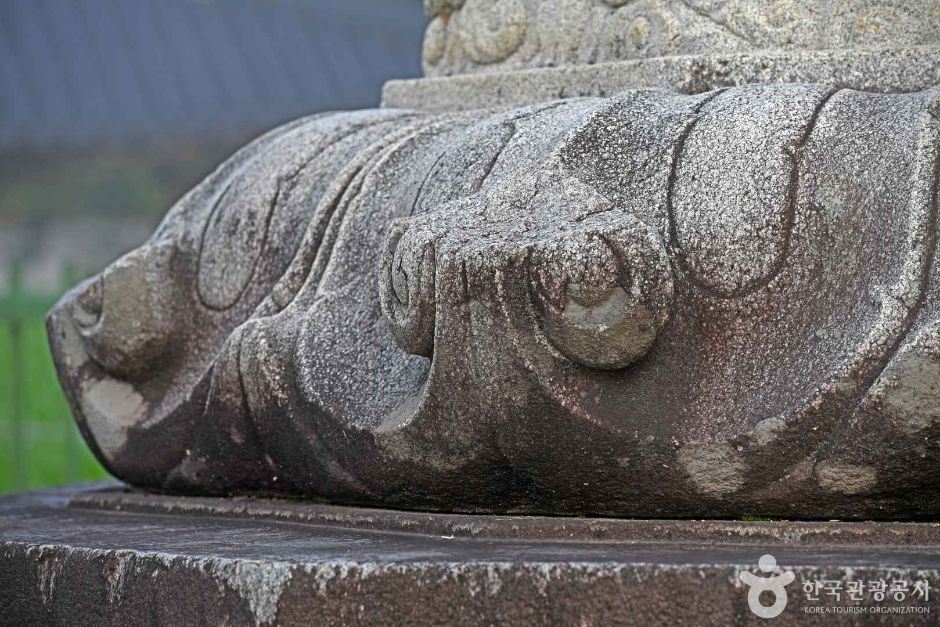
The octagonal pedestal of the stone lantern is engraved with lotus flower patterns, cloud patterns, and ansang (the shape of an eye or an eye-like shape), and the lotus stone (a lighting fixture with a lotus flower pattern made of stone) on top is engraved with an octagonal lotus pattern. The end of the stone lantern was decorated with a large ear flower (a flower-shaped decoration carved at the end of the stone lantern or stone tower). The stone lantern is symmetrical with the large lotus (shaped like a lotus flower facing upwards) on the upper stone with the drum-shaped main stone (pillar of the stone lantern) in between. Additionally, an okgaeseok (a stone that covers a stone pagoda or stone lantern like a roof) was placed over the hwasa-seok (the middle part of the stone lantern that is supposed to light the lantern), and a large ear flower was placed at the end of the okgaeseok. The overall majestic yet cheerful appearance of the stone lantern is harmonized with the delicate patterns.
Details
- Admission fee
- Free