 (new window)
 (new window)
 (new window)
 (new window)
 (new window)
 (new window)
 (new window)
 (new window)
 (new window)
 (new window)
 (new window)
 (new window)
Chinese Scholar Tree in Sinhyeon-dong, Incheon
Korean name인천 신현동 회화나무
Machine-translated from Korean. Show original
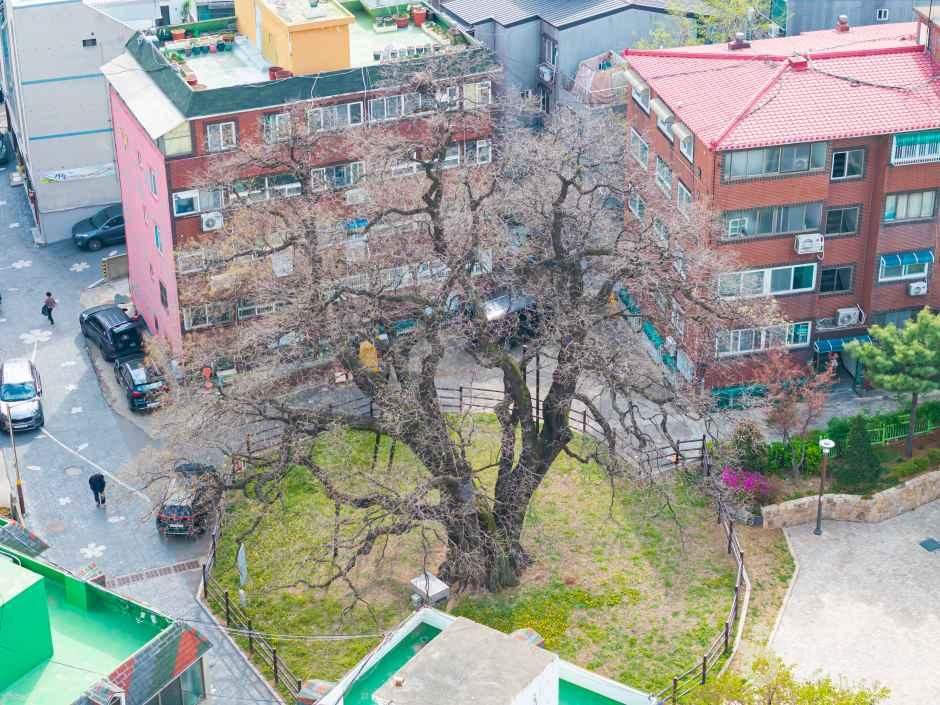
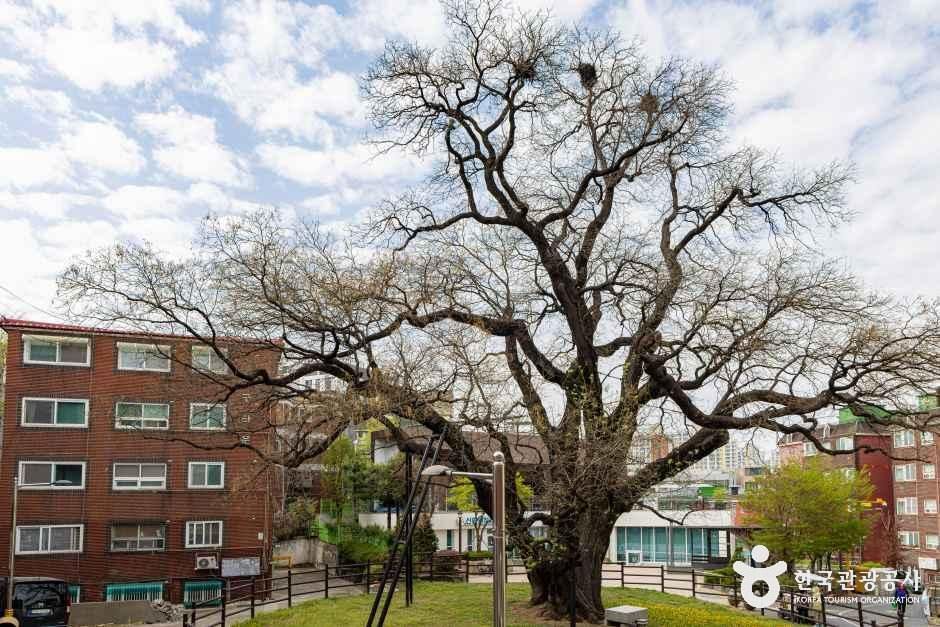
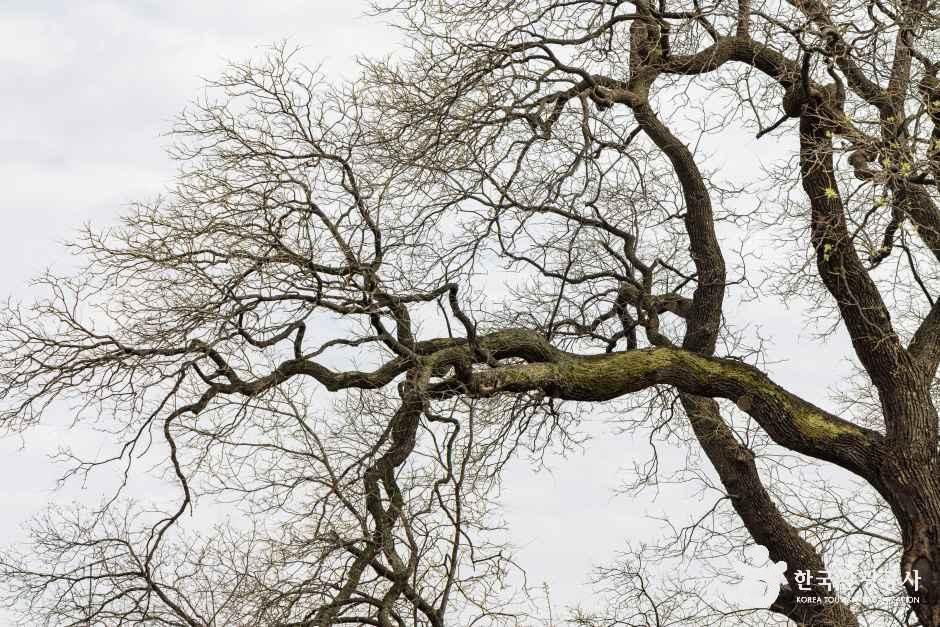
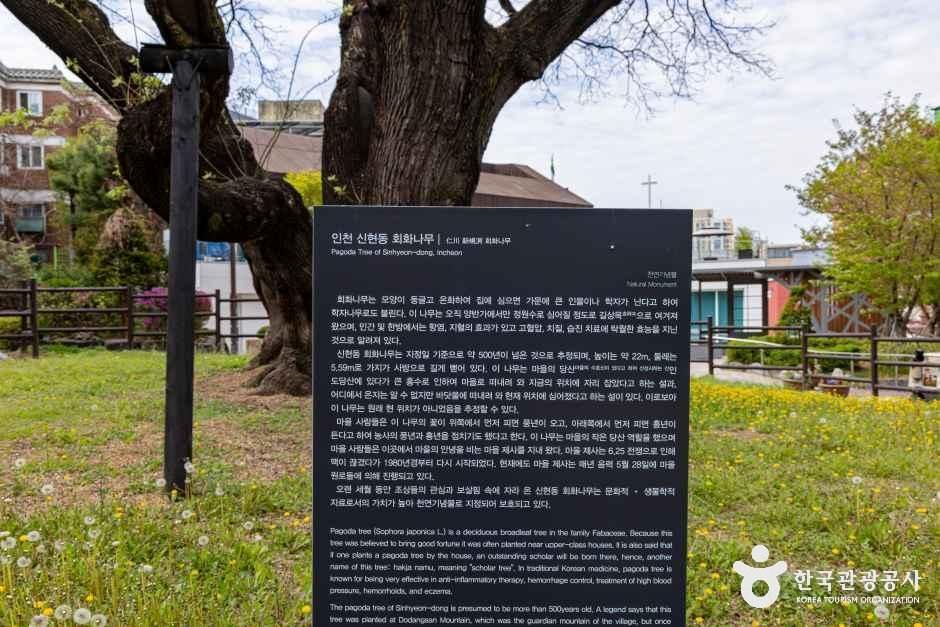
The locust tree is round in shape and gentle, so in China it was often planted in the tombs of high officials and the homes of scholars. In Korea, envoys traveling to and from China brought it in and planted it in local schools and temples. In particular, the locust tree is one of the broad-leaved trees that is resistant to pollution and is also used as a street tree or park tree. The locust tree is estimated to be about 500 years old (as of the designated date), has a height of 22 m, a circumference of 1.76 to 5.84 m at chest height, and its branches extend long in all directions. It provides shade to the villagers and is known as a tree that predicts good or bad harvests. The villagers are said to have predicted that when flowers bloom on a tree, if they bloom first at the top, there will be a good harvest, and if they bloom first at the bottom, there will be a poor harvest.
The locust tree is a tree that has been under the care and attention of our ancestors for a long time, and is designated and protected as a natural monument due to its high value as a cultural and biological resource.
(Source: Korea Heritage Service National Heritage Portal)
Details
- Admission fee
- Free
Accessible travel information
Machine-translated from Korean.
Mobility
- Access route
- No step at the entrance, so wheelchair access is possible
- Entrance passage
- The main entrance has no level difference, so it is wheelchair accessible
- Restroom
- Accessible restroom available
- Other facilities
- Facilities for the disabled are available in Wonsin Neighborhood Park.
Visitor reviews 0
Seohae-gu travel resources
All guides →- e-book