 (new window)
 (new window)
 (new window)
 (new window)
 (new window)
 (new window)
 (new window)
 (new window)
 (new window)
 (new window)
 (new window)
 (new window)
 (new window)
 (new window)
 (new window)
 (new window)
 (new window)
 (new window)
 (new window)
 (new window)
Gyeongju Daereungwon Ancient Tomb Complex
Korean name경주 대릉원 일원
Machine-translated from Korean. Show original
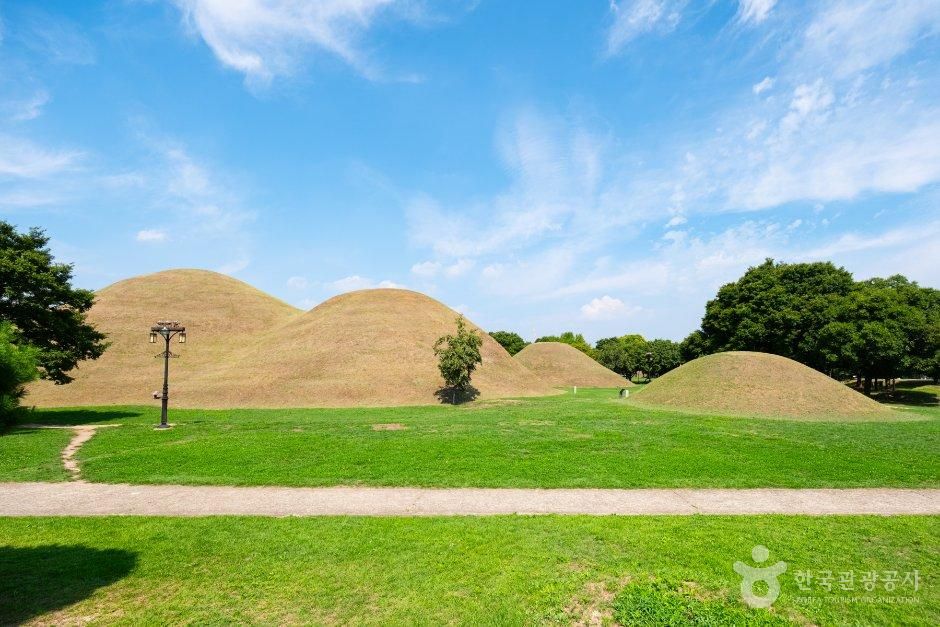
Gyeongju Daereungwon refers to the Silla-era tomb cluster located in Nodong-dong and Hwangnam-dong, Gyeongju, and consists of the Nodong-dong tomb cluster, Noseo-ri tomb cluster, Hwangnam-dong tomb cluster, Hwangodong tomb cluster, and Inwang-dong tomb cluster. The Nodong-dong tomb cluster consists of tombs from the Old Silla period and includes Bonghwangdae, Sikrichong, and Geumnyeongchong.
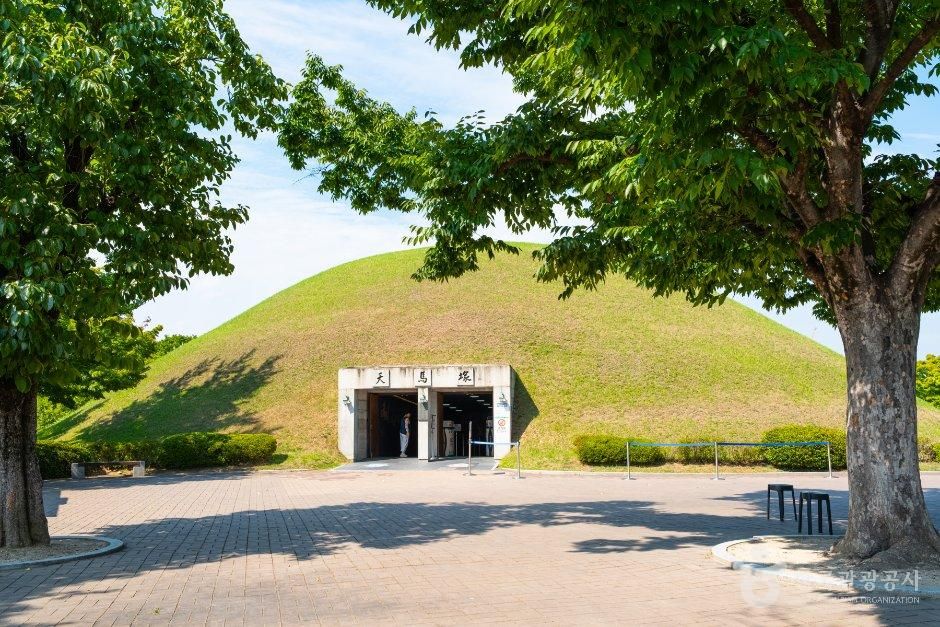
Bonghwangdae is a stone-piled wooden chamber tomb with a base circumference of 230m, a diameter of 82m, and a height of 22m, making it the second largest tomb after Hwangnamdaechong. The Noseo-ri tomb cluster contains 14 large and small tombs on a wide flatland. Along with the Bonghwangdae tomb in Nodong-ri, there is Tomb No. 130, which is comparable in scale, as well as the Geumgwanchong where a gold crown was excavated in 1921, and the Seobongchong which was visited and observed during excavation by Swedish Crown Prince and archaeologist Gustaf VI Adolf in 1926 on his way to Japan. In 1946, a bronze vessel inscribed with the name of King Gwanggaeto of Goguryeo was discovered, and there are also the Houchong, Eunpyeongchong, Ssangsangchong, and Machong which helped estimate the chronology of Silla tombs. Pottery fragments were excavated from Ssangsangchong, and horse bones and saddle fragments from Machong. The Hwangnam-dong tomb cluster consists of early Silla tombs, some of which are within the Daereungwon area. There are 30 tombs with circular earthen mounds. The large tombs are stone-piled wooden chamber tombs, and around them are small tombs whose mound markers have disappeared. Within Daereungwon are the former Tomb of King Michu, Cheonmachong, and Hwangnamdaechong. Cheonmachong was excavated from April 6 to December 4, 1973. Cheonmachong is 47m in diameter and 12.7m in height, and many artifacts including a gold crown were found. Since a saddle strap decorated with the Cheonmado (Heavenly Horse Painting) was excavated at that time, it was named Cheonmachong and its interior is open to the public. The Hwangodong tomb cluster is densely packed with large and small Silla-era tombs. Due to long neglect, many mounds have been damaged, but currently about 10 tombs are confirmed to maintain their tomb form. Based on the tomb structures excavated in adjacent areas, these tombs are presumed to be stone-piled wooden chamber tombs of royalty or nobility mainly from the 4th to 5th centuries.
The ancient tomb cluster in Inwang-dong is located at the easternmost edge among the tomb clusters remaining in the central plain of Gyeongju. During the Japanese colonial period, 13 mounded tombs were identified, and a further survey found 10 additional tombs. Some of the tombs were excavated, revealing burial styles from the Samhan and Three Kingdoms periods. This shows that tombs began to be built from an early time. Most of the Three Kingdoms-period tombs with remaining mounds are stone-piled wooden chamber tombs, and based on the artifacts excavated and the size of the structures, they are presumed to be the tombs of Silla aristocrats.
Travel Information: Experiencing the Charm of the Korean Wave - Dramas
This is the place where Boram spent her free time during the school trip, a park densely packed with ancient tombs. About 20 large tombs form a dreamlike atmosphere as if drawing a ridge line. The spot where a single magnolia tree stands among the tombs is famous as a photo zone. It is recommended to also visit Cheonmachong, the only tomb open to the public.
Details
- Admission fee
- [대릉원]
- 무료
[천마총(개인)]
- 성인 3,000원
- 청소년 2,000원
- 어린이 1,000원
[천마총(단체)]
- 성인 2,400원
- 청소년 1,600원
- 어린이 800원 - Restroom
- Yes
Visitor reviews 0
Videos of this place
Gyeongju City travel resources
All guides →- e-book